Porta-Safe® Temporary Power for Jobsites
Temporary and portable power for Nuclear and Fossil Plant Outages, Refinery Turnarounds and Shipyard Fabrication and Ship to Shore power requirements. Porta-Safe® units step down 600 / 480 VAC plant primary power and deliver GFCI-protected 240 / 208 / 120 VAC where the welding, lighting and tool loads actually are needed. Models include two- and four-wheel carts, skid with lift eyes and fork slots, or fixed and stationary designs. Each unit is custom built to your specification.
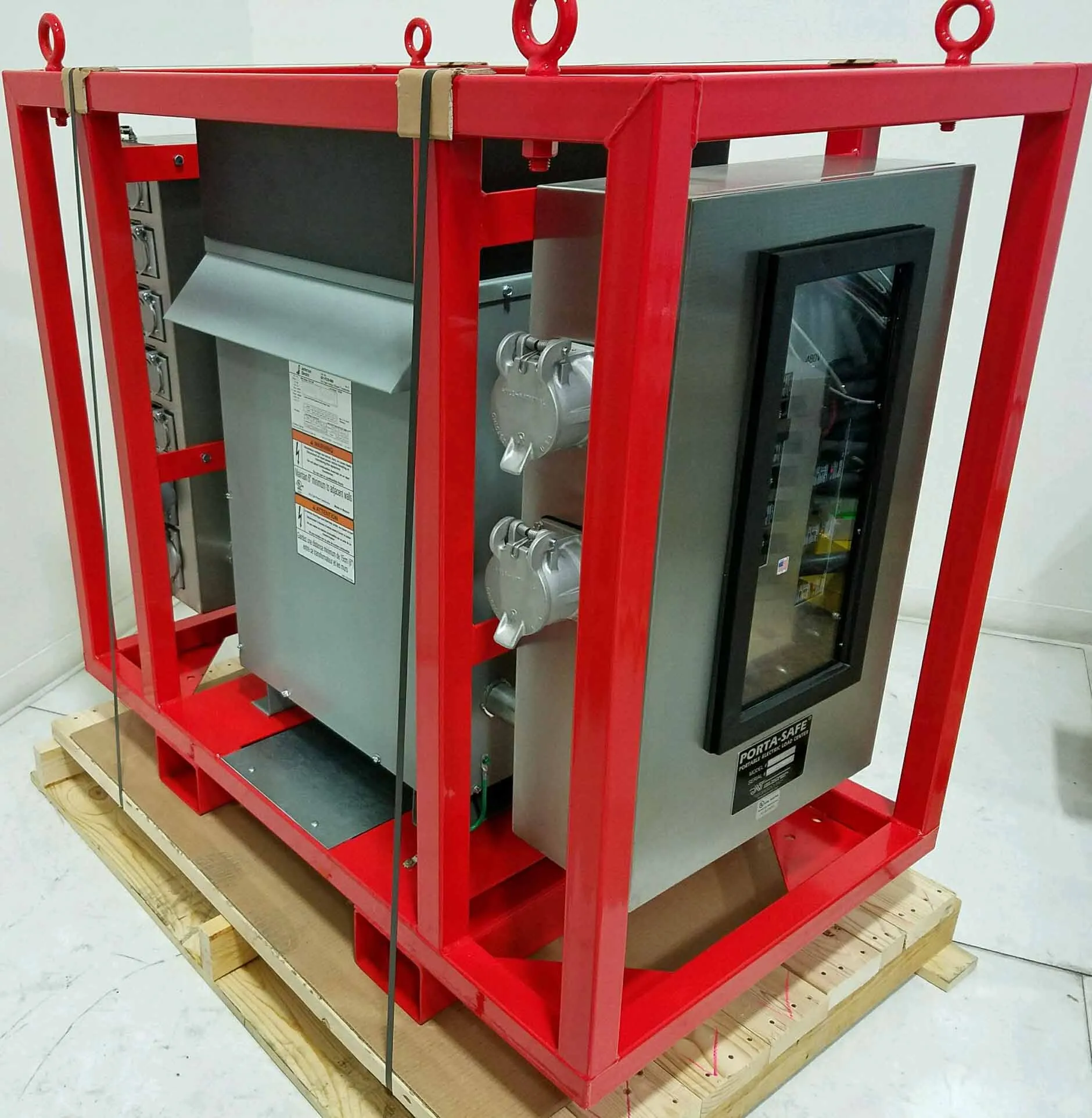
What every unit has in common
- Input
- 600 / 480 VAC
- Three-phase plant supply, fused disconnect or main breaker protected.
- Output
- 240 / 208 / 120 VAC
- Single- and three-phase receptacles sized to the loads you list.
- Protection
- GFCI
- Ground-fault protection on the receptacles crews plug into.
- Standards
- NEC · CSA · UL
- NEC-compliant, CSA / UL Listed designs; shipyard designs listed to UL 1640.
Products
Wheeled carts and splitter boxes
Portable Power Distribution Units
Two- and four-wheel carts that step 600/480 VAC plant power down to GFCI-protected 240/208/120 VAC at the point of use.
Step-down600/480 → 120 V
Skid, trough and fixed installations
Stationary Power Distribution Units
Skid-mounted and fixed load centers for outage laydown areas and long-duration temporary power, sized to the job.
FormatSkid / trough
Where they go
Nuclear Temporary Power
Refuel and uprate outages run on the critical path. Units built for nuclear sites carry the documentation, the GFCI protection and the ruggedness a plant QA department expects.
Shipyard and Ship-to-Shore Power
Welding, grinding and tool power aboard ships under construction or repair — stackable, fork-slot units with decontactor-style arc-flash receptacles, UL Listed to UL 1640.
Fossil plant outages and refinery turnarounds use the same units; the nuclear and shipyard pages exist because those environments add requirements of their own.
Built to order, by the manufacturer
Porta-Safe is a division of JNT Technical Services, Inc., which engineers and builds the units. Tell us the supply you have, the receptacles you need and where the unit will live, and you get a drawing and a quotation from the people who will build it — not a catalog number.